Yarazu No Ame
Yakushima Prefecture, Japan
Competition: 2026
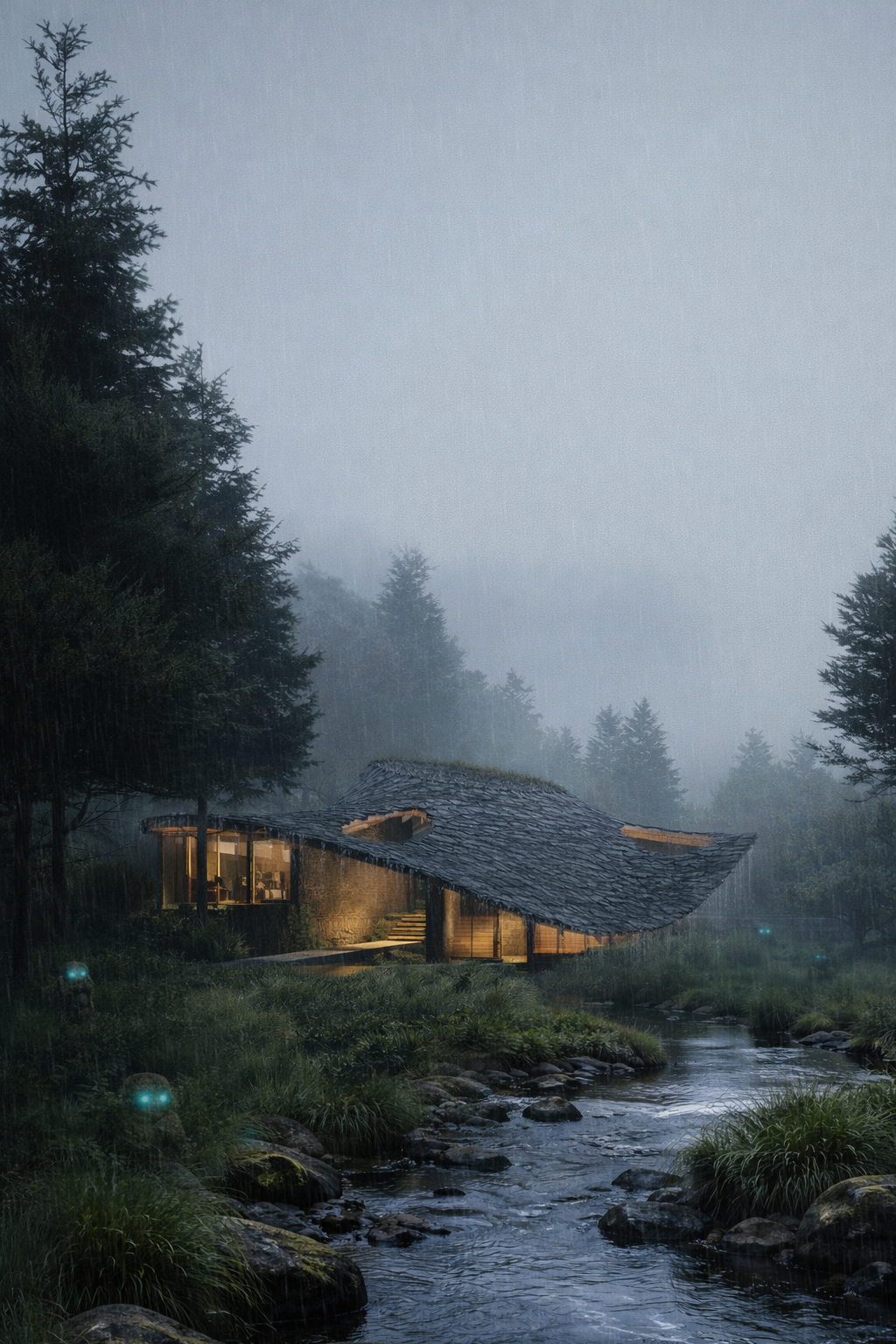
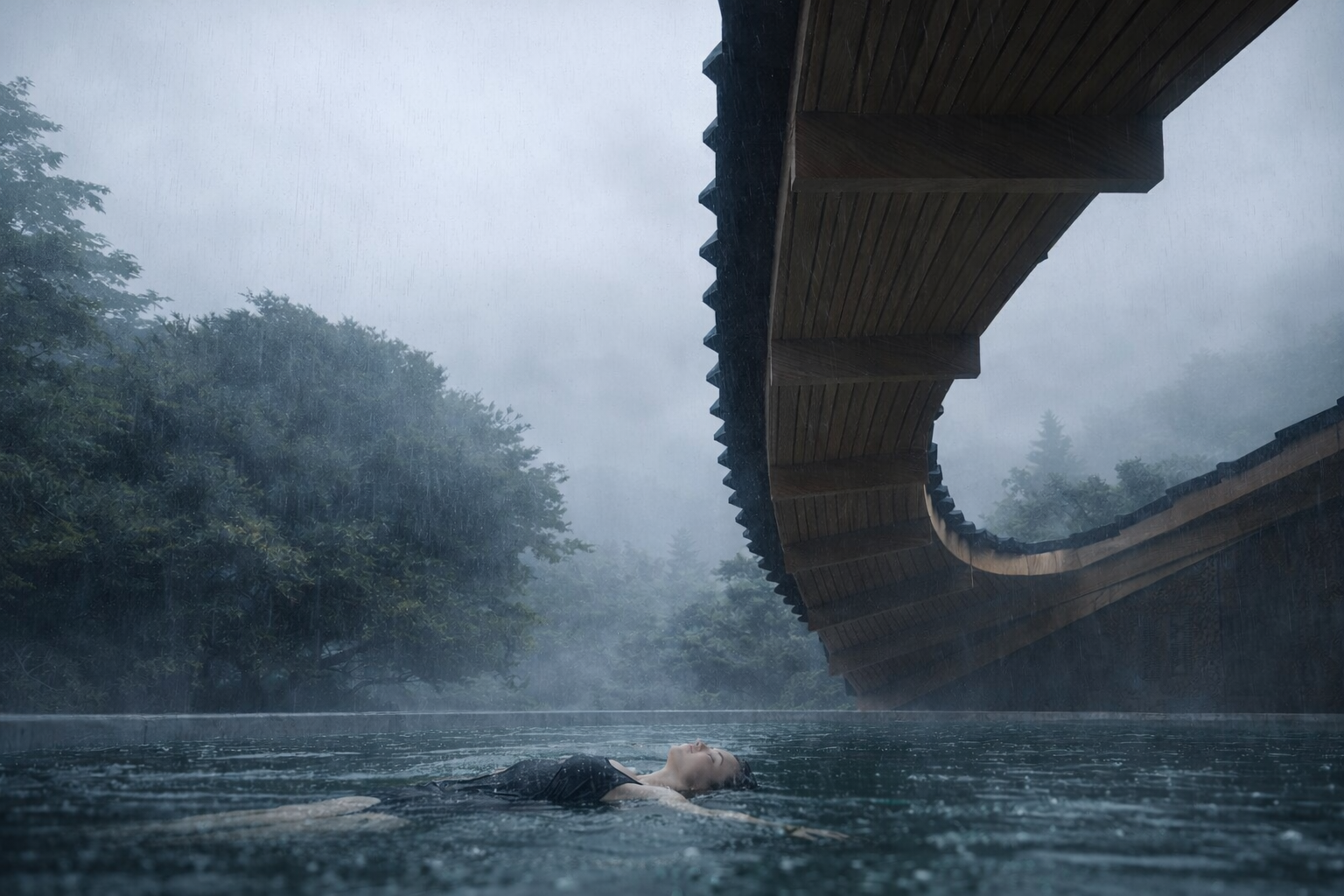
On the island of Yakushima, weather is not a backdrop, it is a constant presence. Rain falls on more days than not, and the atmosphere nourishes a landscape where subtropical heat, mountain mist, and cool alpine air can all unfold in a single day. Yarazu no Ame describes the sudden rain that arrives just as one is about to depart, offering an unexpected reason to stay. This project embraces rain as an agent of pause, reflection, and heightened awareness, transforming moments of delay into a ritual of dwelling. Rather than a conventional hotel, Yarazu no Ame offers residential-scale hospitality; private, flexible, and deeply inhabitable. In doing so, it becomes inseparable from Yakushima’s weather and landscape.
Here, rain is not an inconvenience; it is the reason to stay.
-
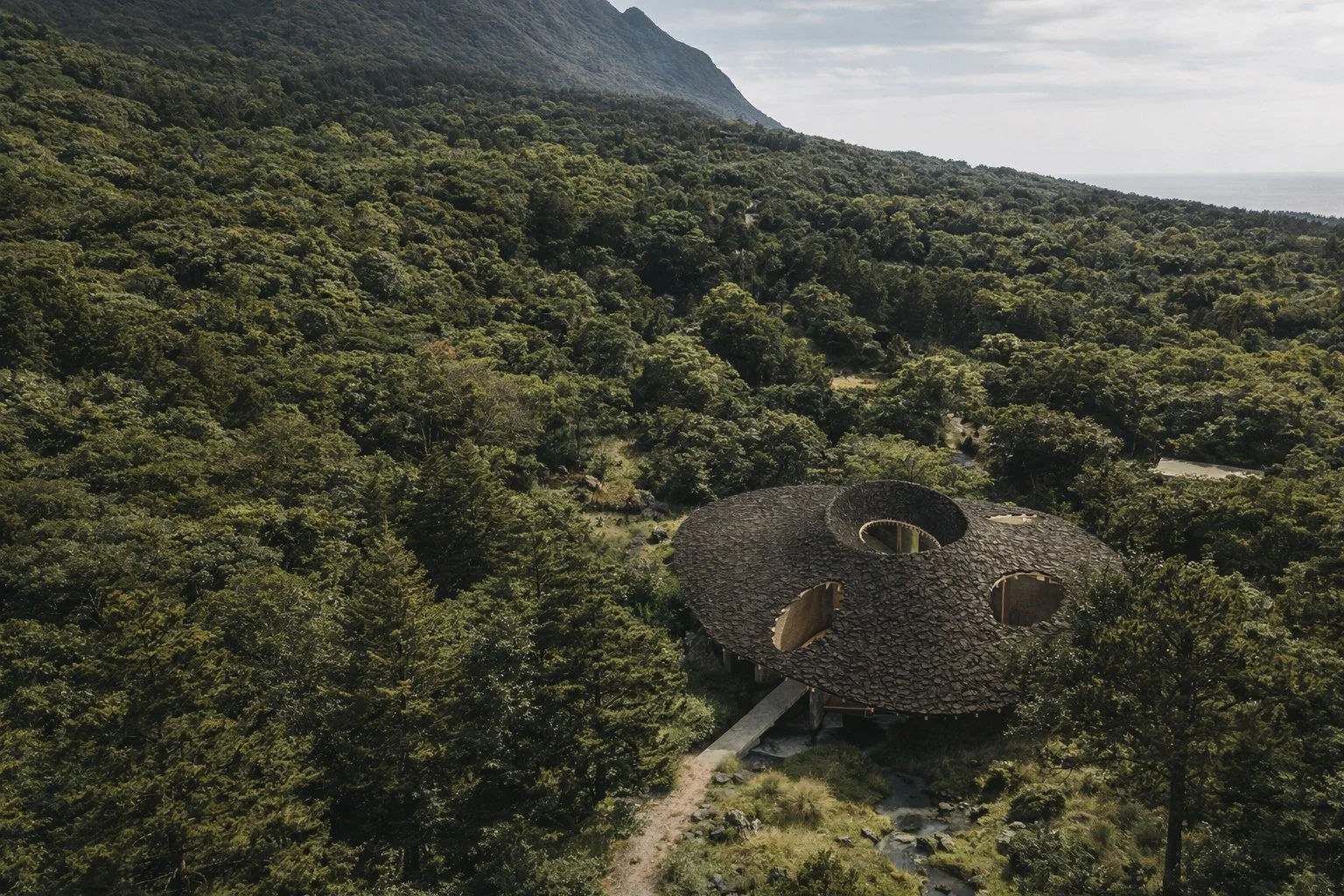
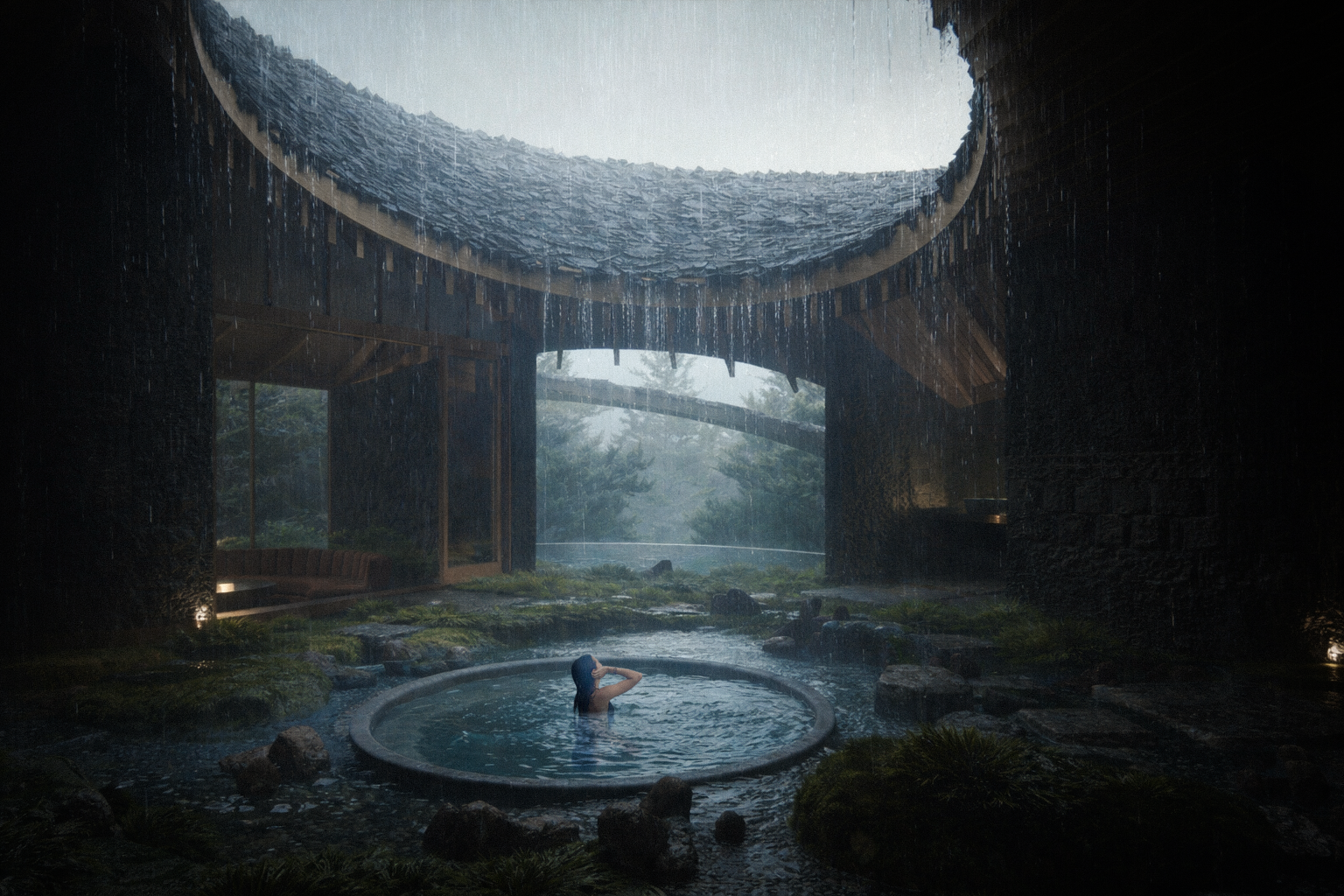
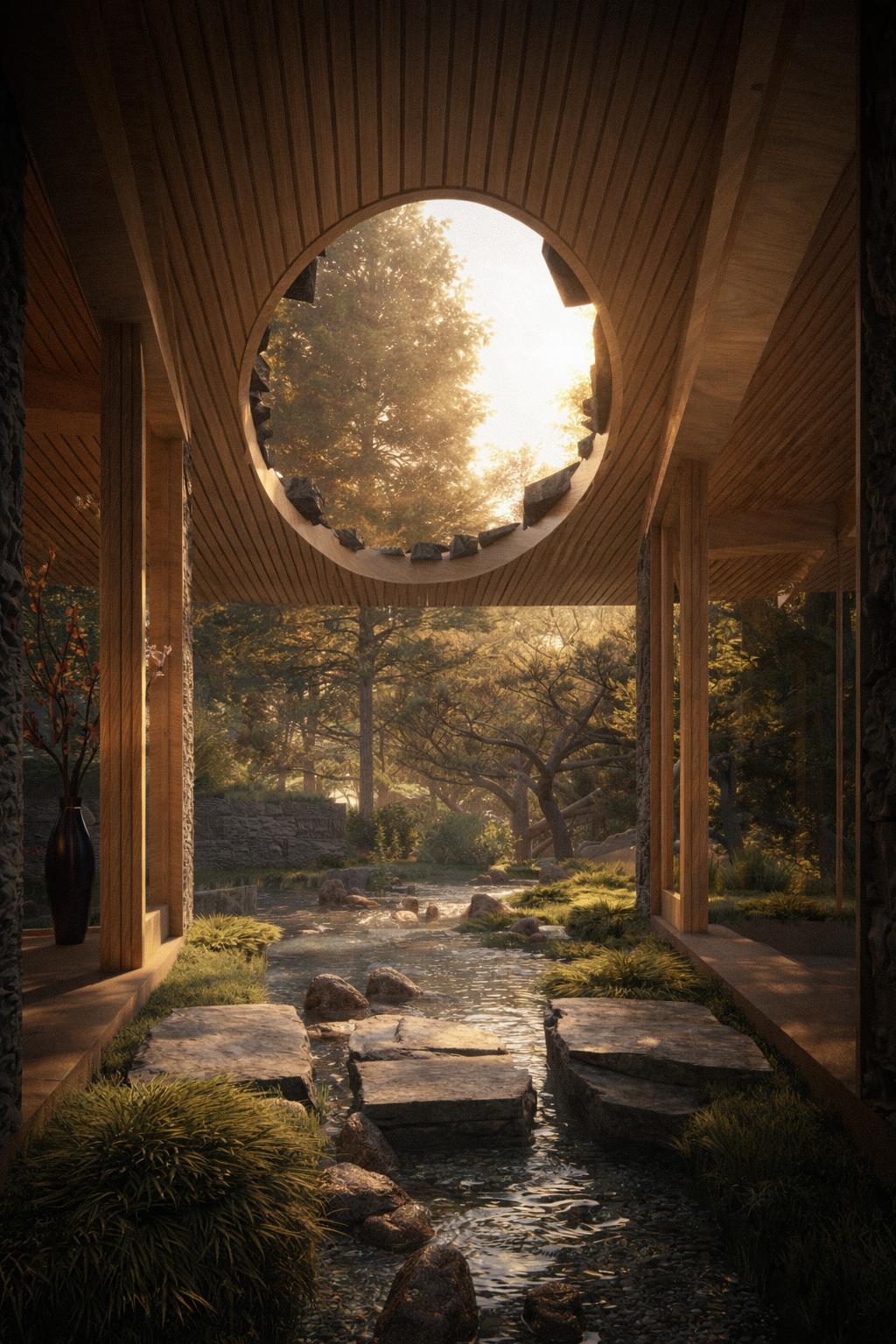
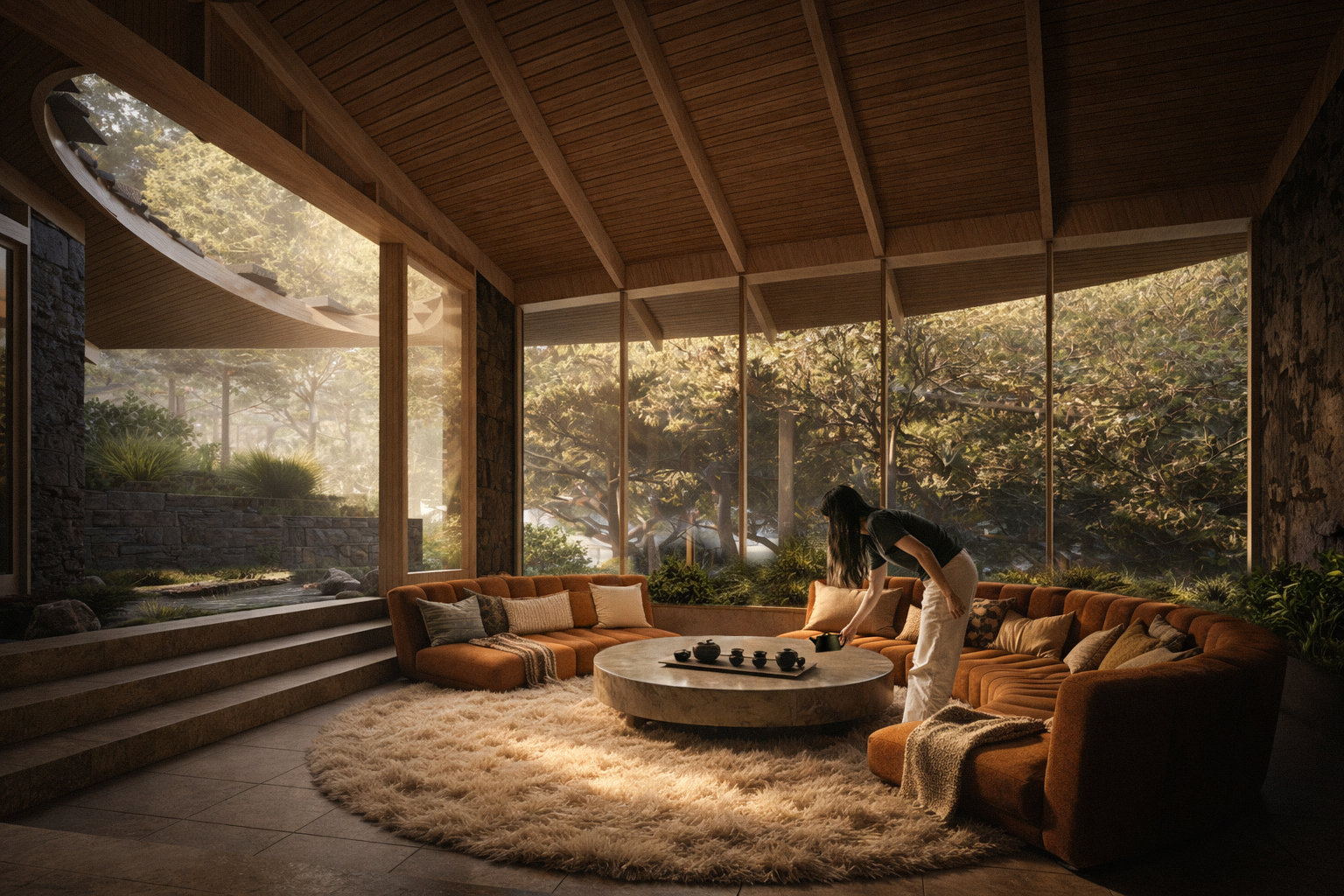
The private dwelling is arranged as a series of discrete pavilions gathered beneath a single sweeping roof. Rather than diverting water away, the architecture invites it in. The roof funnels rainfall toward a central oculus, cascading into a rain court, amplifying sound, movement, and atmosphere. An existing stream is allowed to rise and flow through the site, weaving between pavilions and blurring the boundary between building and landscape. Water moves through the dwelling as liquid, vapour, and sound, informing spatial organisation, material use, and sensory experience.
The building and landscape are structured as a pilgrimage, echoing take-mairi and the slow, ritual ascent of Yakushima’s mountain pilgrimages. A series of landscaped pathways and steps guide occupants through key spatial experiences: arrival, immersion, and re-emergence. Each space is influenced by a distinct relationship to water.
Planting is designed to map and heighten the unique atmospheric conditions of Yakushima. Tree selection transitions from smaller, fragrant, edible species to larger, wilder canopy trees, gradually echoing the structure of the existing Yakusugi cedar forest.
The path through the site unfolds as a sequence of atmospheres defined by shifting relationships between body, landscape, and water.
Arrival begins within a yuzu orchard (Citrus junos), where filtered light, citrus fragrance, and warmth establish a clear threshold. Immersion follows as the path descends into the shade of maple, oak, and camphor trees (Acer palmatum, Quercus glauca, Cinnamomum japonicum). Here, water becomes still and cool, drawing attention inward. Re-emergence is marked by exposure and release. Surrounded by Japanese cedar (Cryptomeria japonica) and pine, the landscape grows wilder, the ground softens, the air cools, and water returns in motion and sound.
The journey continues upon arrival at the dwelling. The threshold is light and open, where fragrance, sound, and flowing water establish orientation and intention. From here, movement tightens and descends, drawing the body into darker, cooler spaces of immersion, where bathing and enclosure form the spiritual centre of the house.
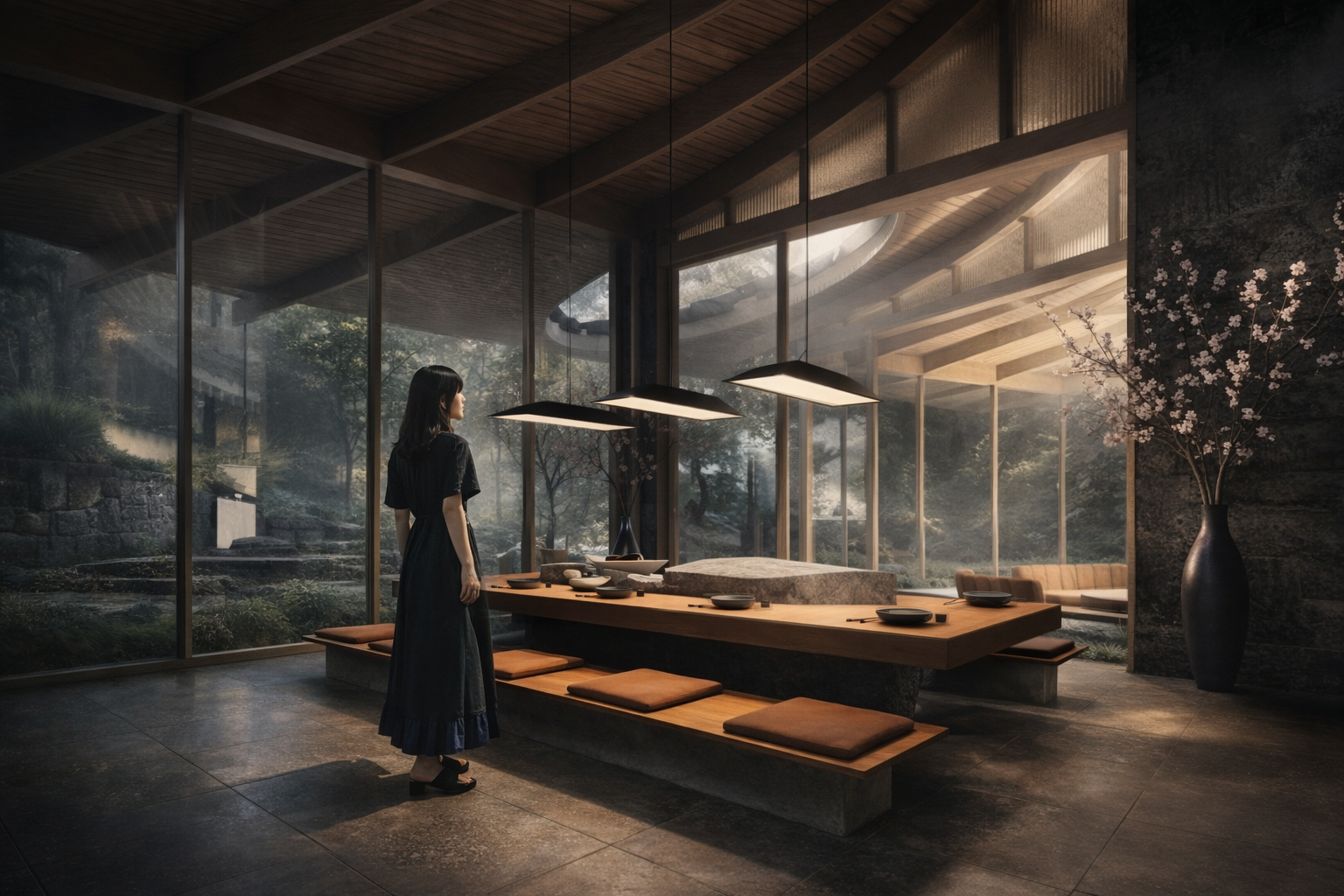
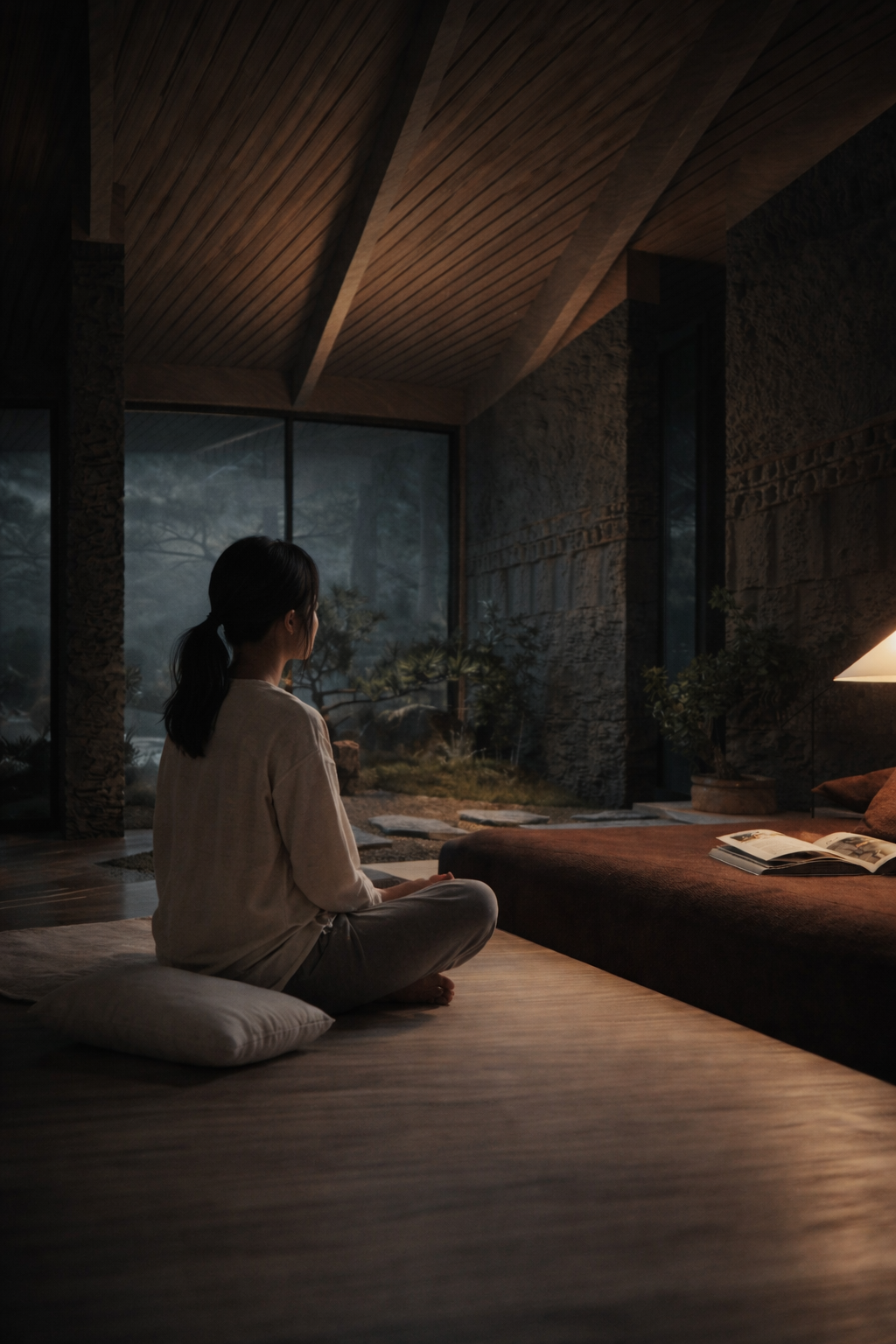
Communal spaces gather along an inner path with outward views, where dwelling is collective and porous to the landscape. Beyond this, the journey stills. Private rooms withdraw toward the forest edge, where sound is reduced to rain and water moving below, and habitation resolves into repose and reflection.
Together, the building and landscape can be experienced as a passage of time, weather, and ritual.
Team
Micah Cruz, Harrison Gale, Alexander Kindlen, Kiri Bowmer